Web Automation & Feature Curator

Is Software Really Dead? What REA Actually Changes

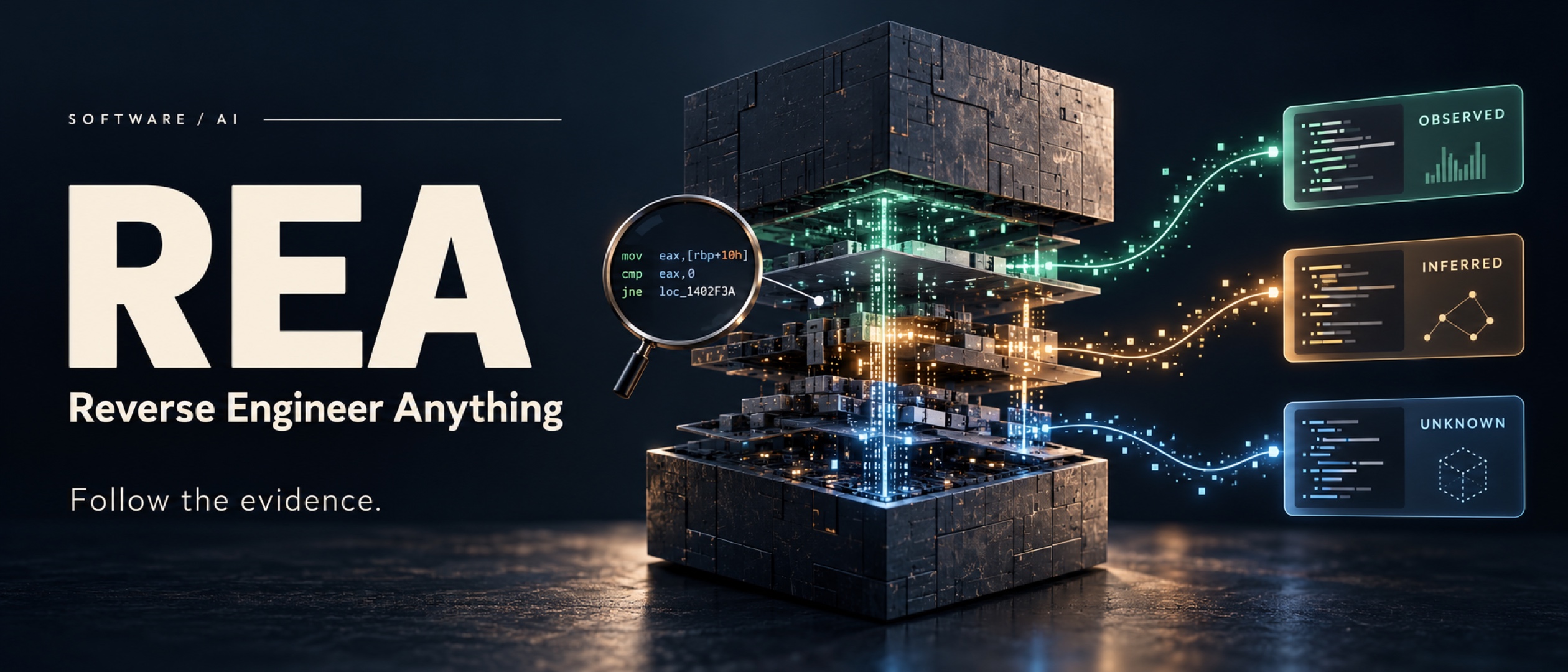
There’s an open-source project called REA — Reverse Engineer Anything — and it has become the center of a very familiar debate: if AI can understand compiled software, is closed-source software basically done for?

The name makes people want to make sweeping claims. But the more useful questions are much more specific: what does REA actually inspect, can it reconstruct an entire product, why is it getting so much attention, and would it help someone building a similar app?


Apple's Smart Home Push: HomeView and Four Launches Explained

Apple is making a bigger push into the smart home. Its latest announcements bring together a new household display, an updated compact speaker, a faster streaming box, and a collection of connected accessories developed with LG Electronics and Schneider Electric.

Together, Apple HomeView, HomePod mini 2, the fourth-generation Apple TV 4K, and Apple Home Collection give Apple Home a more complete hardware lineup. The shared thread is Apple Intelligence: a more conversational Siri, easier access to personal information, and simpler ways to manage devices throughout the house.

When a Cloud Region Goes Dark: 495 Organizations Caught in IDCF's Ransomware Outage

IDC Frontier has confirmed that a ransomware attack caused the outage in part of its IDCF Cloud service. The incident began at about 3:40 a.m. on October 7 and affected four zones in East Japan Region 1: tesla, henry, pascal, and joule.

The number that stands out is 495. That is how many businesses and local governments IDC Frontier says are affected. Their virtual servers are stopped and cannot be restarted. The company isolated the region from the network, shut down the systems, and suspended customer access to management consoles in other regions while it checks their safety. IDC Frontier’s second notice

OpenAI Just Dropped 722 Math Manuscripts. The Hard Part Starts Now.

On Tuesday, OpenAI put an unusually large object on the internet: 722 mathematical manuscripts, grouped into 372 families of related results, all produced by an internal frontier model.

There was no months-long keynote runway, no single flagship paper for people to pretend they had read. The material simply appeared in a public GitHub repository: papers, supporting files, some Lean formalizations, ten abbreviated reasoning summaries, and a map of the catalogue.

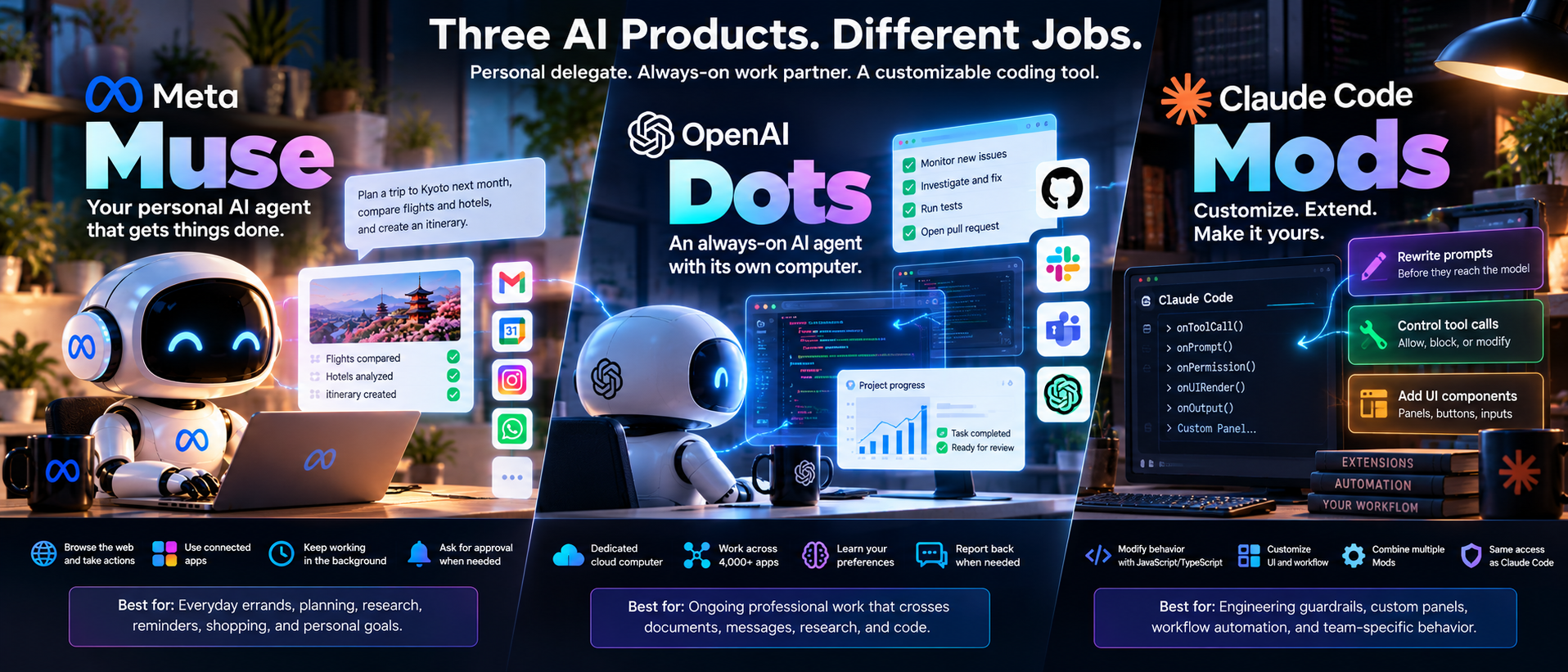
Muse, Mods, and Dots: Three Very Different Ideas About AI Agents

Meta Muse, Claude Code Mods, and OpenAI Dots are often placed in the same conversation because all three point toward a more active kind of AI.

That is where the similarity ends.

Muse is a personal agent. Dots are persistent agents for ChatGPT. Mods are a way to rewire Claude Code itself. Putting them on one feature checklist makes Mods look like the odd one out—and it is. Mods are not a personal assistant and they are not a worker you delegate a weekend task to. They are closer to an extension layer for an AI coding tool.

Meta Muse Is an AI Agent with Somewhere to Work

Most AI assistants still feel like a slot machine: type a question, wait for an answer, and decide what to do next yourself.

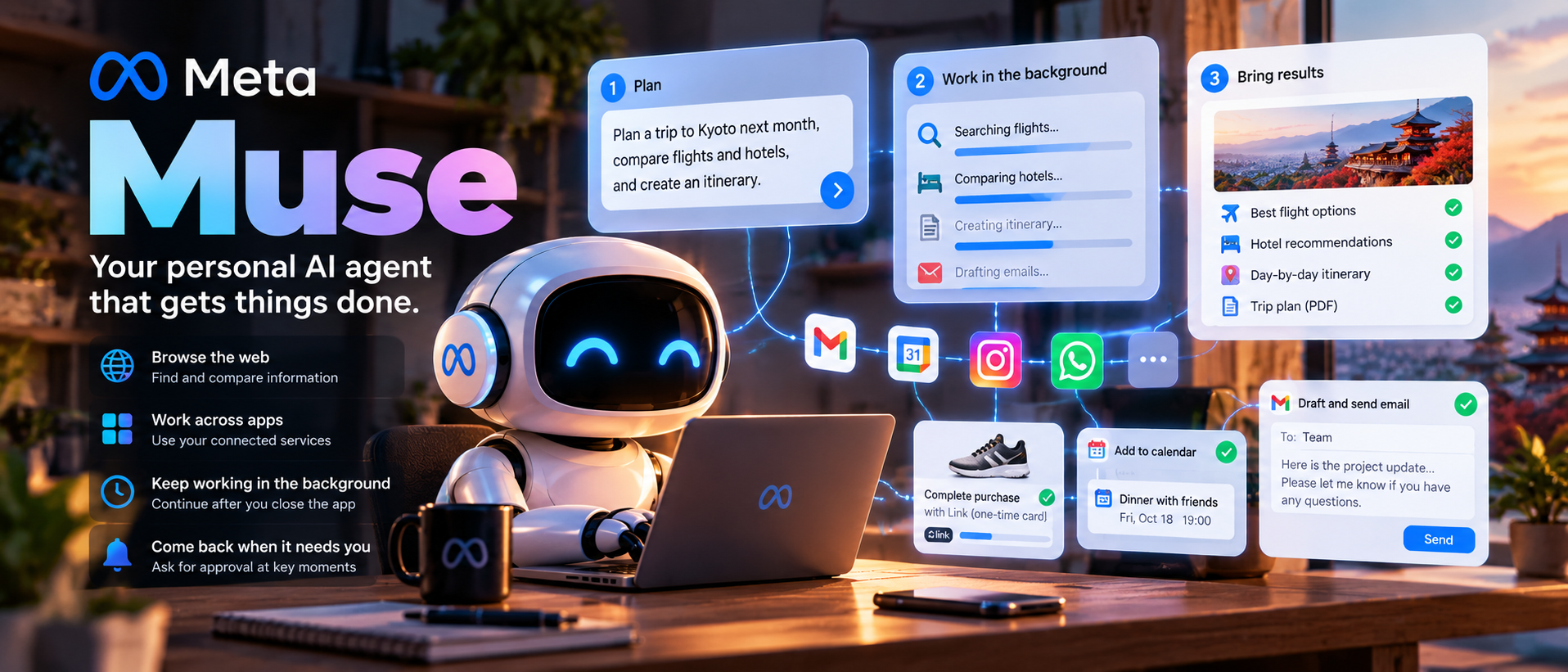
Meta Muse is trying to change that rhythm. Meta introduced it in September as a personal AI agent that can browse the web, work across connected apps, keep going after the app is closed, and come back when it needs a decision. The pitch is simple: tell Muse what you want done, then let it handle the middle.